Compare
Payload CMS vs WordPress
The modern, developer-first TypeScript framework vs the dominant monolithic PHP platform.
Quick Verdict
This is for you if
- You are building modern React/Next.js applications and need a headless-first CMS with a TypeScript API.
- You want an administration panel tightly coupled to your code structure and Git workflow, rather than managing UI plugins.
- You rely on modern document or relational databases (MongoDB, Postgres, SQLite) to drive complex web applications.
Not a fit if
- You want an established platform powering 42.6% of the web with an ecosystem of over 61,000 free plugins.
- You are launching a traditional monolithic site that requires pre-built themes, page builders (Elementor), or massive e-commerce (WooCommerce).
- You intend to hand off the site to non-technical administrators who need out-of-the-box tools without custom coding.
| Feature Dimension | Payload CMS | WordPress |
|---|---|---|
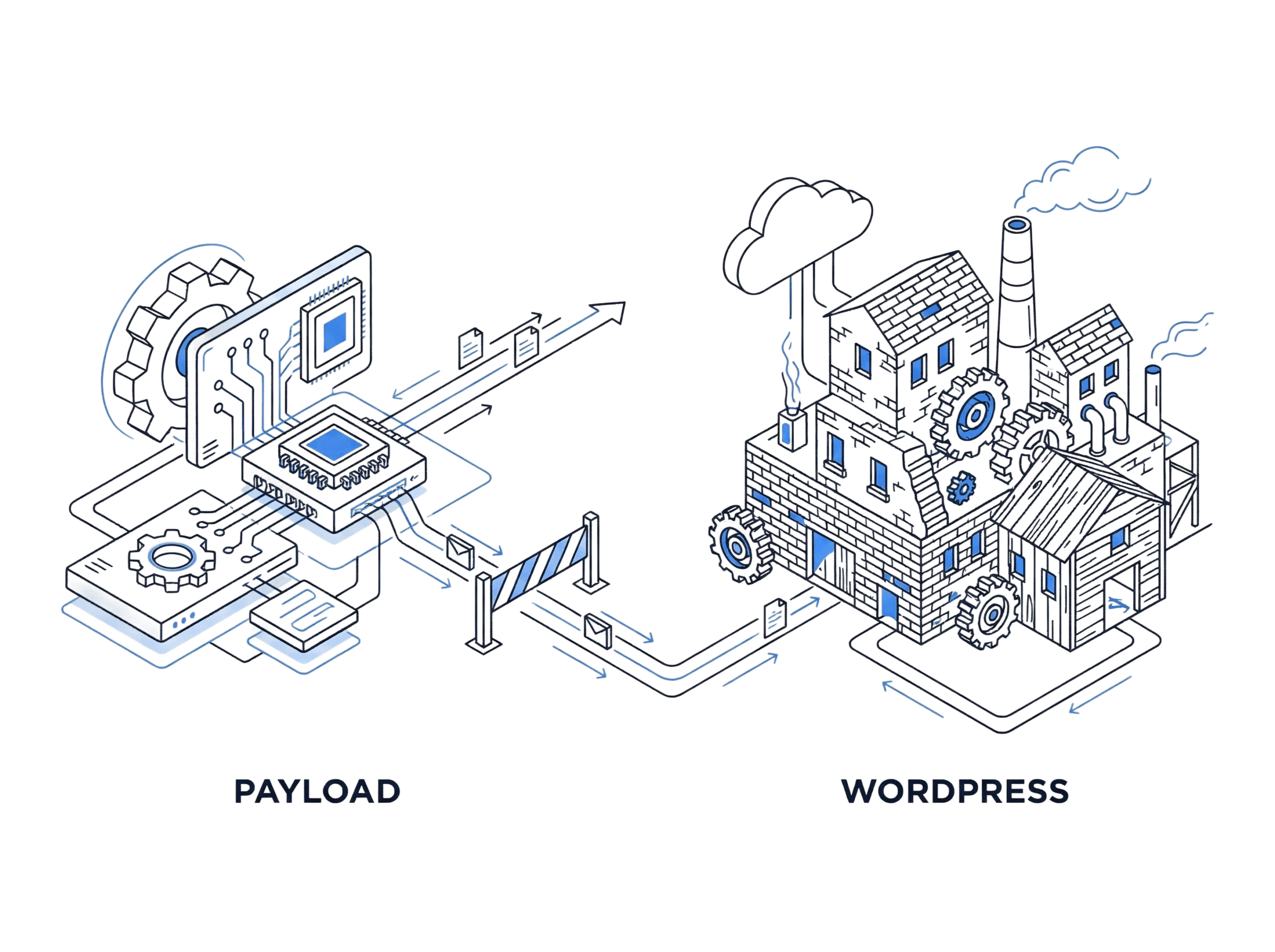
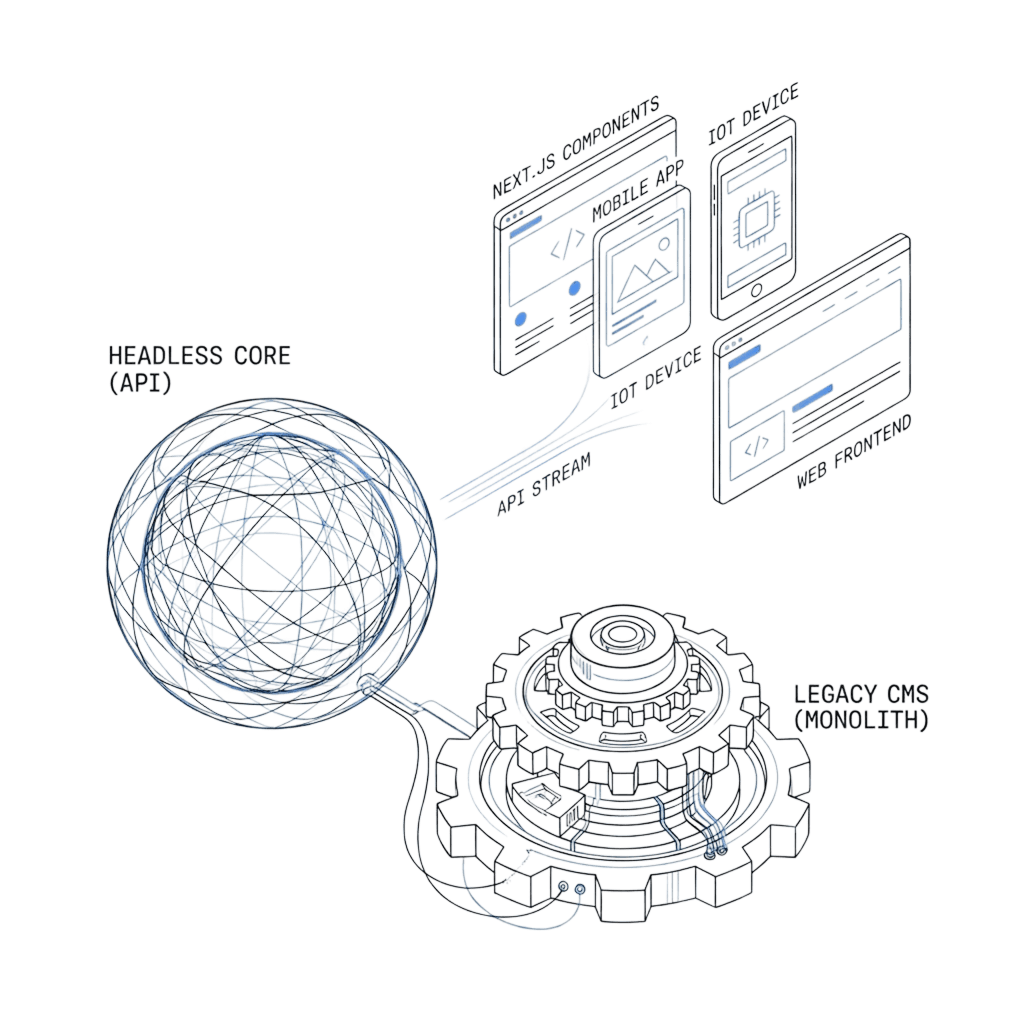
| Core Architecture | Headless-first React/Next.js framework | Monolithic PHP CMS (Headless optional via REST) |
| Language & Stack | TypeScript, Node.js | PHP, MySQL/MariaDB |
| Ecosystem Size | Fast-growing, custom TypeScript plugins | Massive global market (61k+ plugins, 14k+ themes) |
| API Abstractions | Local Node API, REST, GraphQL out-of-the-box | Legacy REST API natively, GraphQL requires plugins |
| Content Modeling | Code-first configuration (TypeScript) | UI-first with plugins/Custom Post Types (PHP) |
| Deployment Model | Serverless (Vercel, Cloudflare Workers) or Node hosting | Standard LAMP/LEMP stack hosting globally |
| Enterprise Footprint | Emerging (Backed by Figma, growing Fortune 100 usage) | Dominant (Used by Microsoft, eBay, Mozilla subdomains) |
Where Payload wins
Modern Headless Architecture Designed for Next.js
Payload was built from day one to operate as an API-first framework integrating natively with modern frontend tooling. By working directly with the Local API in Next.js Server Components, execution time drops massively compared to routing data over traditional HTTP interfaces.
Code-First Content Modeling in TypeScript
Unlike traditional CMS workflows that heavily rely on UI click-paths for building schemes, Payload leans on a Git-managed, TypeScript-first approach. Every collection, hook, and plugin sits strictly under source control.
Alignment with Serverless Infrastructure
As opposed to traditional persistent PHP servers, Payload comfortably deploys on Edge and Serverless infrastructure (like Vercel or Cloudflare Workers) natively syncing with modern deployment pipelines.
The Payload CMS hosting guide covers all deployment options and real infrastructure costs.
Where WordPress wins
Unmatched Market Scale and Ecosystem
WordPress runs nearly 60% of all websites whose CMS is known. With an ecosystem boasting over 61,000 free plugins—and the 7+ million-strong WooCommerce engine—almost any integration requirement can be met with an off-the-shelf solution.
Zero-Code Editorial Control
From block editors (Gutenberg) to heavy third-party page builders, WordPress removes deep developer dependencies. An editorial team can build layouts, change themes laterally, and restructure sites entirely through the administration panel.
Commoditized Hosting and Maintenance
A vast industry exists solely to host, cache, secure, and maintain WordPress via managed providers. If you want generic infrastructure without custom devops, WordPress offers unparalleled hosting options.
Migration considerations
Migrating to Payload:
Migrating off WordPress involves a complete stack shift from PHP/MySQL to Node/TypeScript. The architecture goes from monolithic to API-driven. Data will need mapping from WordPress's unified wp_posts tables into strongly typed Payload collections.
Migrating to WordPress:
Fictionalizing a Payload-to-WordPress move is less common, but generally relies on exporting JSON databases and heavily rebuilding the custom React UI into a PHP theme layer or relying on WordPress's REST API as a newly placed backend.
Decision Framework
The Final System Check
For the cost comparison behind that decision, see what a Payload CMS build actually costs.
Choose Payload if
- You are a developer-centric team standardizing on Next.js/TypeScript.
- You consider the content management system a foundational layer of your bespoke web application structure.
- You desire strict programmatic control over validations and database lifecycles.
Choose WordPress if
- You want an enormous marketplace to supply feature requirements lacking bespoke time.
- The project runs on standard blog/commerce models natively handled by existing plugins.
- Content, layout management, and theming sit strictly in the hands of non-technical stakeholders.
If you're choosing Payload
Payload CMS Pricing
What drives project cost — scope, architecture complexity, migration, and hosting model. What to expect before you start.
Payload CMS Developer
One of ~3 Payload partners globally. Principal-led builds, architecture advisory, and migrations for teams building seriously on Payload.
Payload CMS Live Demos
See Payload running in real projects — multi-locale and multi-tenant architectures with live frontends, admin panels, and source code.