See Payload CMS running in real projects, not just screenshots.
Live examples built to answer the questions teams actually have before choosing the stack.
Live Demos
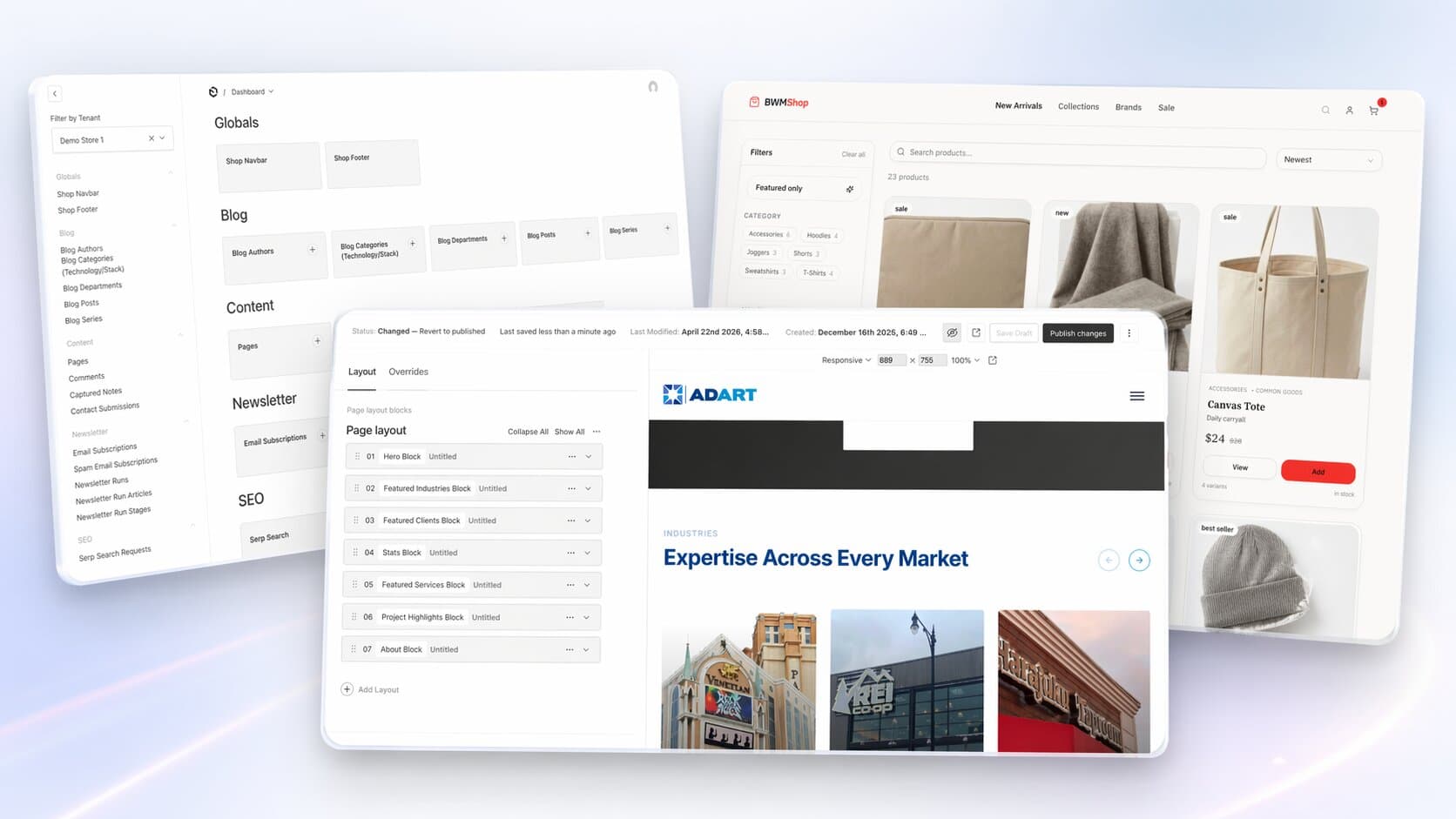
Three demos, three architectural patterns.
Multi-locale for teams serving multiple markets from one codebase. Multi-tenant for teams building platforms where multiple customers or units share one product. Ecommerce for teams evaluating Payload as the base for a custom storefront.
Multi-locale
Multi-locale Payload CMS demo
For teams that need one content platform to serve multiple languages or regional markets without duplicating the entire project. Especially relevant if you are replacing a legacy CMS or moving away from fragmented multi-site setups.
What it shows
- Localized fields in Payload
- Locale-aware routing in Next.js
- Translated SEO metadata
- Locale-specific navigation
- Reusable content blocks across languages
- Self-hosted on Hetzner VPS via Docker
What to look at
Open the frontend and switch languages. Then compare the structure in the admin.
Why it matters
Multi-locale content is one of the first places where content modeling decisions become expensive if they are made too casually.
Next.js + Payload CMS advisoryMulti-tenant
Multi-tenant Payload CMS demo
For teams building platforms, client portals, internal tools, or white-label systems where multiple customers or business units share one product.
What it shows
- Tenant-aware collections
- Shared schema with tenant isolation
- Role-based access control
- Global users with tenant membership
- Tenant-filtered admin views
- Deployed on Vercel with Neon managed Postgres
What to look at
Switch between tenants and compare what changes on both the frontend and the admin side.
Why it matters
Multi-tenant projects often fail because teams model users, tenants, and access rules too late or too loosely.
Payload CMS auditE-commerce
Payload ecommerce showcase
For teams evaluating Payload as the foundation for a content-led storefront, product catalog, or custom ecommerce experience.
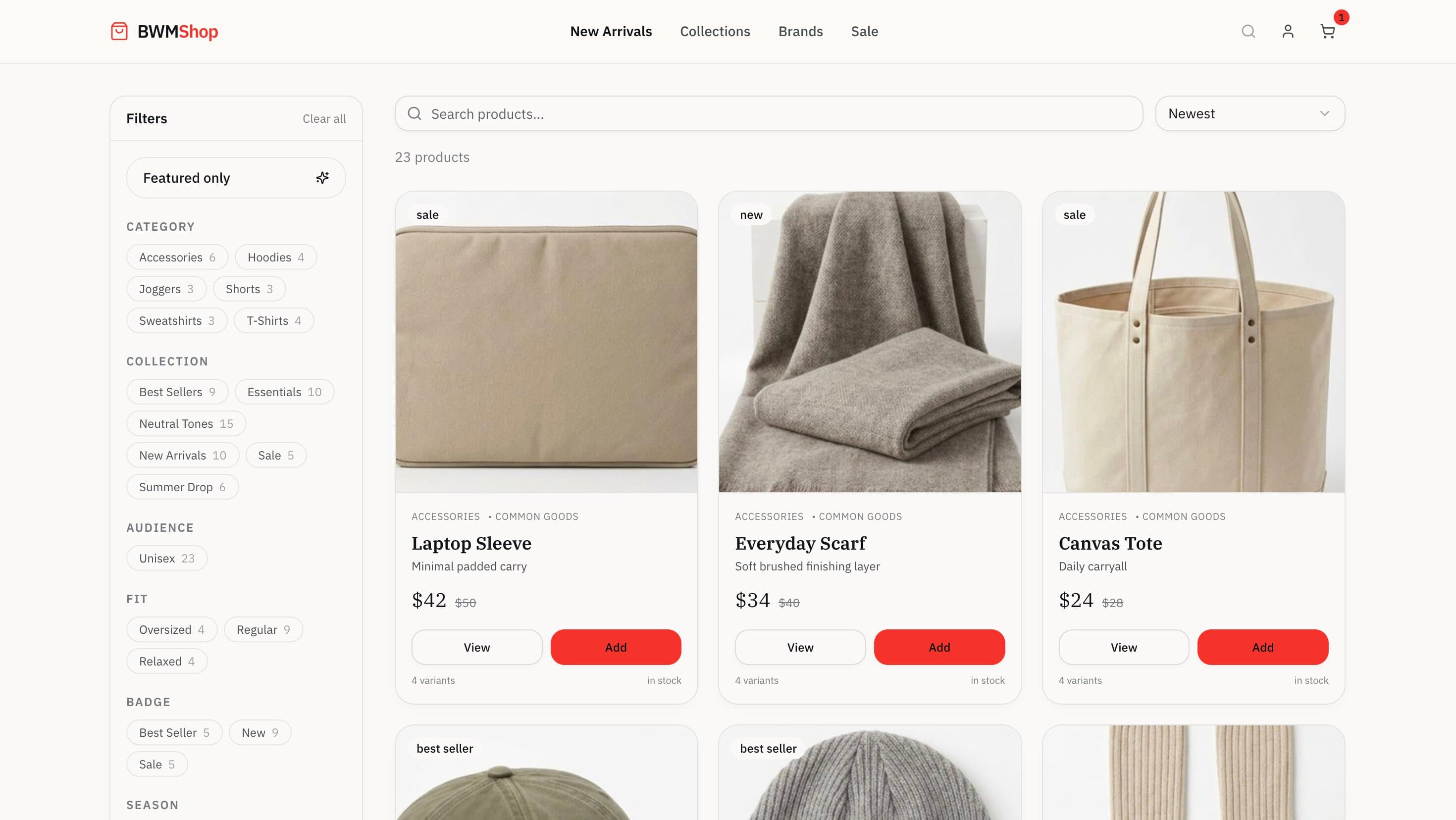
What it shows
- Payload ecommerce plugin in a live storefront
- Catalog listing with filterable product discovery
- Variant-aware product modeling
- Category and collection structure
- Product detail pages with Payload-managed content
- Cart flow and routed checkout demo
Best fit
- Content-led ecommerce websites
- Branded storefronts that need CMS flexibility
- Custom product catalogs
- Teams evaluating headless commerce architecture
Demo links
What to look at
Browse the catalog, open a few products, test the filters, and walk through the cart and checkout flow.
Why it matters
Ecommerce projects usually become hard when product structure, content structure, and frontend behavior are modeled in separate systems.
Payload CMS developerDeployment Options
Not boxed into a single hosting model.
One of Payload's real advantages is deployment flexibility. That changes cost, performance, ownership, and long-term risk.
Edge-first
Cloudflare
For teams that want edge-friendly delivery, strong global performance, and modern platform primitives.
Infrastructure ownership
Docker
For teams that want the most control. Docker Compose plus Nginx gives predictable runtime behavior and fixed monthly cost.
Managed frontend
Vercel
For teams that want fast frontend deployment and managed platform ergonomics. Strong developer experience.
FAQ
Frequently Asked Questions
Are these real production projects?
Can I access the admin panel?
Can I reuse the patterns?
Want a custom Payload build?
These demos show real patterns, but every production system still needs decisions around access control, schema design, deployment, and content workflows. Start the conversation.
Talk to me about your project